tl;dr: If you want it to be really worth it in general(including music), they are available.
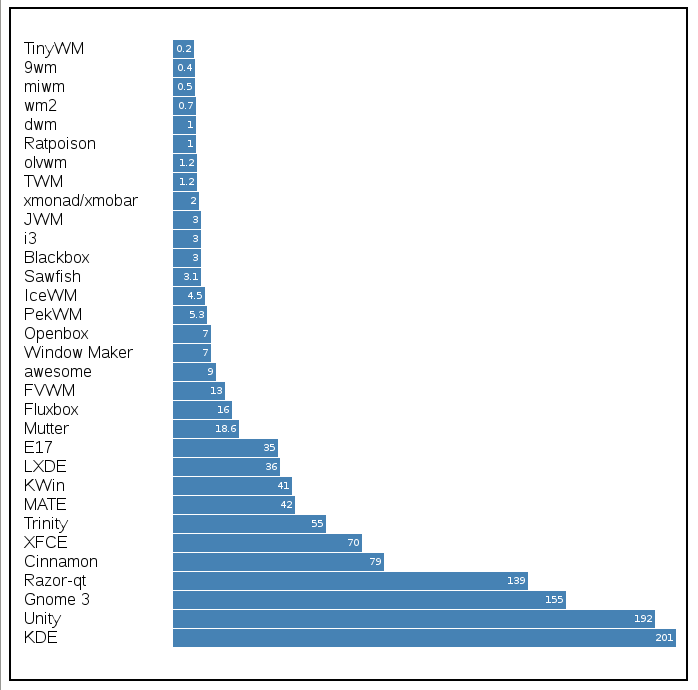
First look at those comparisons:
https://flexion.org/posts/2014-03-memory-consumption-of-linux-desktop-environments.html
Different Window Managers consume amounts of RAM starting from 0.2MB up to 201MB.
They might have different features, but they all do the same thing(from wikipedia):
A window manager is system software that controls the placement and appearance of windows within a windowing system in a graphical user interface.
Back to those “special OSes”.
Basically they are available since the 70s.
I used to work a lot on thin clients and mainframes and it’s very amusing to see, that the companies are trying to sell you “cloud computing and working in the cloud” as something new, which in reality, is just the thin client/mainframe paradigm from the 70s.
Take the PS3 for example. It came with 256MB of RAM and the OS was optimized to use about 70-90MB. Is the PS3/OS really worth it in general? Yeah, totally.
The thing is, no one (has to) care(s) about resources anymore, as every standard PC nowadays comes equipped with at least 8GB of memory.
New and fancy file systems like zfs(which is awesome), need a lot of RAM on it’s own(2GB of RAM is a recommended amount).
Who does local compiling in these days? Distributed compiling is pushed a lot with fancy build servers, which is also nothing new, compared to the mainframe area.
Actual GPU drivers these days come in packages of hundreds of MB, while one for your specific machine can be build into 1MB.
So, yes. Those OSes are available to the market and they are worth in general(also music). A lot of musicians are even using chip-sound(Sound chips from the C64 and/or Amiga).
It’s just all about getting rid of the bloat you don’t need and tailor the OS and apps to your needs. But it’s not a convenient way. You have to think and put in some work. No one want’s to do that any more.
But hings are changing again. Look at all those bare metal initiatives from different hardware and software vendors.
Apple with Metal, ATI with Mantle. DirectX 12 and OpenGL 5 are implemented from scratch, to get rid of the driver overhead bloat. If someone being sarcastic, he might say, that this something 3dfx was doing with glide way back then 
We have multiple processors in that PC? Idea! We could use them without overhead. Big deal, ey
Imagination/PowerVR seems the only company caring for ray-tracing in hardware, instead of legacy rasterizing.
In fact there was a thesis about hardware accelerated raytracing with DSPs in 1996:
As more and more companies realize the fact, that a lot of computing power is just wasted, cause of bloated legacy stuff, the more old paradigms are being awakened.


 awesome…
